AI Tools for Business: The Complete Guide to Smarter Growth in 2026

In Short, Artificial intelligence has evolved from an emerging technology into an essential competitive advantage for organisations of every size. Just a few years ago, AI was primarily associated with large technology companies that had substantial budgets and dedicated engineering teams. Today, the landscape has changed significantly. AI Tools for Business are now accessible, affordable, and powerful enough to help small businesses, startups, and large enterprises automate repetitive tasks, improve customer experiences, and make faster, data-driven decisions.
Whether you own a small business, manage a growing startup, or lead an established organisation, adopting the right AI Tools for Business can save hundreds of working hours each year. In addition, these intelligent solutions enable employees to spend less time on routine administrative work and more time solving complex problems, building stronger customer relationships, and driving innovation that supports long-term business growth.
From my own experience working in digital marketing, SEO, and business automation, I have seen many companies assume that AI will replace employees. However, the organisations achieving the best results use AI Tools for Business as productivity partners rather than replacements. The real value of AI lies in eliminating repetitive tasks, streamlining workflows, and providing actionable insights, allowing people to focus on creativity, strategic thinking, and informed decision making.
In this comprehensive guide, you will discover the best AI Tools for Business in 2026, learn how different solutions can transform marketing, sales, customer service, operations, project management, and explore practical strategies for implementing AI successfully within your organisation. Along the way, you will also find expert recommendations, real business examples, actionable tips, and proven best practices that will help you maximise your Return on Investment (ROI) while avoiding common implementation mistakes.
Why Every Modern Company Needs Artificial Intelligence Solutions
However, Businesses operate in an increasingly competitive environment where customers expect faster responses, personalised experiences, and consistent service across every communication channel. Meeting those expectations manually becomes difficult as companies grow.
This is exactly where modern AI software creates a measurable competitive advantage. Instead of replacing existing workflows, these intelligent systems enhance them by analysing information, generating insights, and completing repetitive processes much faster than traditional methods.
For example, an AI writing assistant can prepare the first draft of a proposal within minutes. Meanwhile, customer support software powered by AI can answer common questions twenty-four hours a day without requiring additional staff. Similarly, AI analytics platforms can identify trends hidden inside thousands of customer interactions that would otherwise take weeks to discover manually.
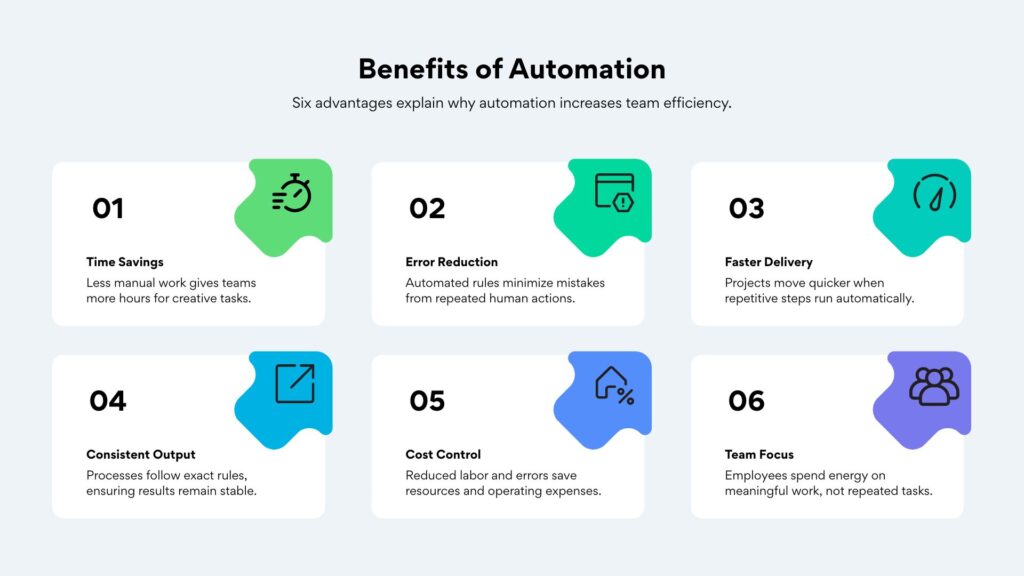
As a result, businesses improve efficiency while reducing operational costs.
Some of the biggest benefits include such as:
- Increased employee productivity
- Faster decision making
- Lower operating expenses
- Better customer satisfaction
- Improved marketing performance
- More accurate forecasting
- Enhanced data analysis
- Stronger competitive advantage
Consequently, AI has become a practical investment rather than an experimental technology.
How AI Tools Transform Everyday Business Operations
Moreover, Artificial intelligence affects almost every department within a company. Although many organisations initially introduce AI into marketing or customer service, successful businesses gradually expand its use across finance, operations, human resources, sales, and project management.
Let’s examine several important areas like as.
Marketing and Content Creation
Indeed, Marketing teams often spend countless hours researching keywords, writing articles, creating advertisements, scheduling social media posts, and analysing campaign performance.
Fortunately, AI significantly accelerates each of these activities.
For instance, marketers can generate blog outlines, email campaigns, product descriptions, and advertising copy within minutes instead of hours. Furthermore, AI-powered SEO platforms recommend keyword opportunities, analyse competitors, and identify content gaps that improve search rankings.
Rather than replacing creative professionals, AI gives them a stronger starting point, allowing more time for editing, storytelling, and strategic planning.
Customer Support Automation
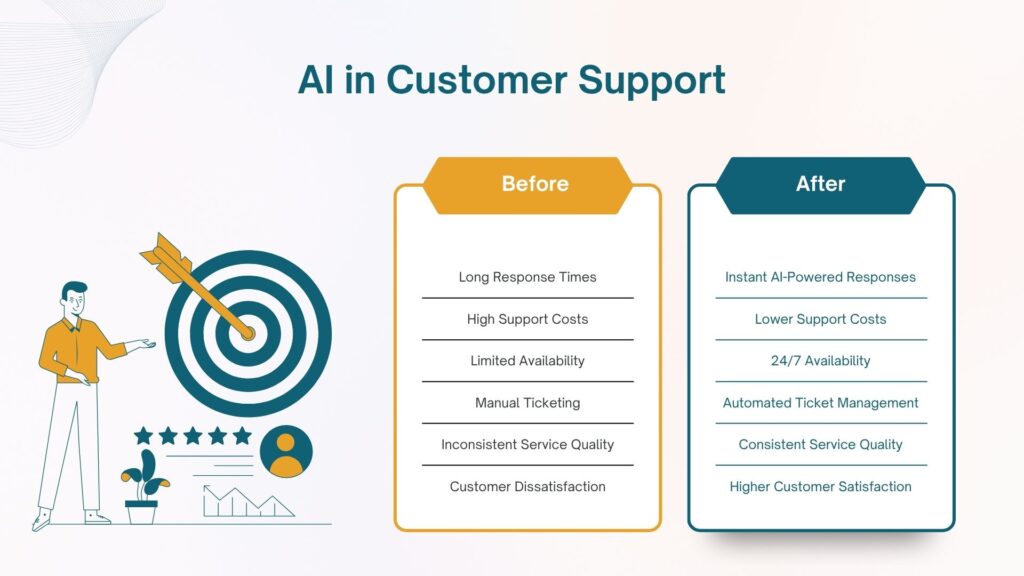
Generally, Customers increasingly expect immediate responses regardless of business hours.
AI chatbots and virtual assistants now answer frequently asked questions, process simple requests, collect customer information, and even schedule appointments automatically.
As a result, support teams spend less time handling repetitive enquiries and more time solving complex customer issues that require human judgement.
Additionally, response times improve dramatically, which often leads to higher customer satisfaction scores.
Sales Process Optimisation
Sales representatives frequently lose valuable time entering customer information, writing follow-up emails, updating CRM systems, and preparing meeting summaries. Fortunately, modern AI assistants automate these administrative tasks
Moreover, they provide recommendations about which prospects deserve immediate attention, so reps can focus on selling instead of paperwork.
Consequently, sales professionals can spend more time building relationships instead of completing paperwork.
Business Analytics and Decision Making
Moreover, Every company collects enormous amounts of information.
However, raw data alone rarely creates business value.
AI analytics platforms organize large datasets, identify patterns, and then predict future trends. Furthermore, they generate reports that executives can understand quickly, making complex data accessible without a dedicated analyst on hand.
Instead of relying entirely on intuition, business leaders make decisions supported by meaningful evidence.
Key Features to Look for When Choosing AI Business Software
However, Selecting an AI platform should never depend solely on popularity. Instead, businesses should evaluate how well a solution integrates into existing workflows.
So, Consider these essential factors before making an investment.
Ease of Implementation
However, The best AI software should integrate smoothly with your existing systems.
If employees require months of training before using a platform effectively, adoption rates will likely remain low.
Therefore, Choose tools that provide intuitive interfaces and straightforward onboarding.
Integration Capabilities
Mainly, Business software rarely operates independently.
Your AI platform should connect easily with productivity tools, CRM software, email platforms, cloud storage, accounting applications, and project management systems.
Strong integrations reduce manual data entry while improving workflow automation.
Data Security and Privacy
Businesses often process confidential customer information.
Therefore, data protection should remain a top priority.
Before selecting any AI solution, verify its security certifications, privacy policies, encryption standards, and compliance with applicable regulations.
Scalability
Your business today may look very different within two years.
Consequently, choose AI platforms capable of growing alongside your organisation without requiring a complete technology replacement later.

25 Best AI Tools Details
The following AI platforms consistently deliver outstanding results across multiple industries. While every organisation has different requirements, these tools represent some of the most practical business solutions available today.
1. ChatGPT
Best for: Writing, brainstorming, customer communication, documentation, research, and productivity.
ChatGPT has become one of the most versatile AI assistants available for businesses. Companies use it to write emails, create reports, generate marketing content, prepare meeting summaries, analyse documents, and support daily decision making.
Practical example:
A small marketing agency reduced weekly content planning time from eight hours to less than three hours by using ChatGPT for brainstorming and first drafts while keeping human editors responsible for final quality.
2. Claude
Best for: Long-form documents, policy writing, business analysis, and research.
Claude performs exceptionally well when analysing lengthy reports and producing thoughtful, structured business content with strong contextual understanding.
3. Google Gemini
Best for: Google Workspace users.
Businesses already using Gmail, Google Docs, Sheets, and Drive benefit from Gemini’s seamless integration, making everyday collaboration much faster.
4. Microsoft Copilot
Best for: Microsoft 365 productivity.
Copilot assists employees inside Word, Excel, Outlook, Teams, and PowerPoint, significantly reducing repetitive office work.
5. Notion AI
Best for: Documentation, project management, and knowledge sharing.
Teams use Notion AI to summarise meeting notes, organise documentation, generate project updates, and maintain internal knowledge bases efficiently.
6. Grammarly
Best for: Business communication.
Professional emails, reports, proposals, and presentations become clearer, more persuasive, and grammatically accurate with AI-assisted editing.
7. Canva AI
Best for: Marketing design and presentations.
Businesses create professional graphics, presentations, social media posts, advertisements, and promotional materials without requiring advanced design experience.
8. Jasper
Best for: Marketing teams.
Jasper specialises in producing high-quality marketing copy while maintaining consistent brand voice across multiple campaigns.
9. Perplexity AI
Best for: Market research.
Business professionals use Perplexity to gather cited information quickly, making research faster and more reliable than traditional search methods.
10. Fireflies AI
Best for: Meeting transcription and summaries.
Fireflies automatically records meetings, creates searchable transcripts, identifies action items, and generates concise summaries for the entire team.
11. Descript
Best for: Video editing, podcast production, training videos, and internal communication.
Descript simplifies audio and video editing by allowing users to edit recordings just like a text document. Consequently, businesses can produce professional tutorials, webinars, and product demonstrations much faster than traditional editing software allows.
Practical example:
A software company records weekly product updates for customers. Instead of spending four hours editing each video manually, the marketing team uses Descript to remove filler words, generate captions, and publish polished videos in less than one hour.
12. HubSpot AI
Best for: Sales, CRM automation, email marketing, and customer relationship management.
HubSpot AI helps businesses generate personalised emails, summarise customer interactions, predict sales opportunities, and automate repetitive CRM tasks. As a result, sales teams can focus more on closing deals rather than updating records.
13. Zapier AI
Best for: Workflow automation.
Zapier connects thousands of applications and uses AI to automate repetitive business processes. For instance, it can automatically save email attachments, create project tasks, update spreadsheets, and notify team members without manual intervention.
14. ClickUp AI
Best for: Project management and team collaboration.
ClickUp AI generates task descriptions, meeting summaries, project updates, and documentation while helping teams organise complex projects efficiently.
15. Asana AI
Best for: Team productivity.
Asana AI identifies project risks, recommends priorities, summarises progress, and helps managers allocate resources more effectively.
16. Otter.ai
Best for: Meeting transcription.
Otter.ai records conversations, creates searchable transcripts, and generates meeting summaries automatically. Therefore, employees can concentrate on discussions instead of taking notes.
17. Midjourney
Best for: AI image generation.
Businesses use Midjourney to create concept artwork, marketing visuals, advertising ideas, and branding inspiration without hiring an illustrator for every project.
18. Adobe Firefly
Best for: Commercial graphic design.
Adobe Firefly enables designers to generate commercial-ready graphics while integrating seamlessly with Photoshop, Illustrator, and Adobe Express.
19. ElevenLabs
Best for: AI voice generation.
Companies create professional voiceovers for advertisements, explainer videos, customer support systems, and online courses using realistic AI-generated voices.
20. Synthesia
Best for: AI video presentations.
Businesses produce training videos, onboarding materials, multilingual presentations, and educational content without requiring cameras or professional presenters.
21. Surfer SEO
Best for: Content optimisation.
Surfer SEO analyses competitors, recommends keyword placement, evaluates content quality, and improves on-page SEO, making it easier to rank for competitive keywords.
22. SEMrush AI Features
Best for: SEO and competitive analysis.
Businesses use SEMrush to discover profitable keywords, monitor competitors, identify technical SEO issues, and optimise content strategies.
23. Writesonic
Best for: Marketing copy.
Writesonic helps create landing pages, product descriptions, advertisements, and blog content quickly while maintaining consistent messaging.
24. Tome AI
Best for: Business presentations.
Tome AI automatically generates professional presentations complete with visuals, structured content, and compelling storytelling.
25. Beautiful.ai
Best for: Investor presentations and business proposals.
Beautiful.ai helps companies create visually appealing presentations while ensuring professional formatting and consistent branding.
Comparison Table of Popular AI Business Platforms
| AI Tool | Best For | Suitable For |
|---|---|---|
| ChatGPT | Content, research, productivity | All businesses |
| Claude | Long documents | Legal, HR, consulting |
| Gemini | Google Workspace | SMEs and enterprises |
| Microsoft Copilot | Microsoft 365 | Corporate teams |
| Notion AI | Documentation | Startups and agencies |
| Canva AI | Graphic design | Marketing teams |
| HubSpot AI | CRM and sales | Growing businesses |
| Zapier AI | Automation | Every business |
| Fireflies AI | Meetings | Remote teams |
| Surfer SEO | SEO | Bloggers and marketing agencies |
How Small Businesses Can Start Using AI Without Overspending
Moreover, Many business owners believe AI requires a large budget. Fortunately, that assumption is no longer true.
Instead of purchasing numerous tools immediately, begin by solving one specific problem. For example, if your marketing team spends too much time writing content, start with an AI writing assistant. Similarly, if customer enquiries overwhelm your support staff, implement an AI chatbot first.
Once employees become comfortable using one solution, gradually introduce additional tools. This phased approach reduces resistance while increasing adoption rates.
Moreover, many premium AI platforms offer free plans or affordable subscriptions, allowing businesses to test functionality before making significant investments.
A Practical AI Workflow for Enterprise Growth
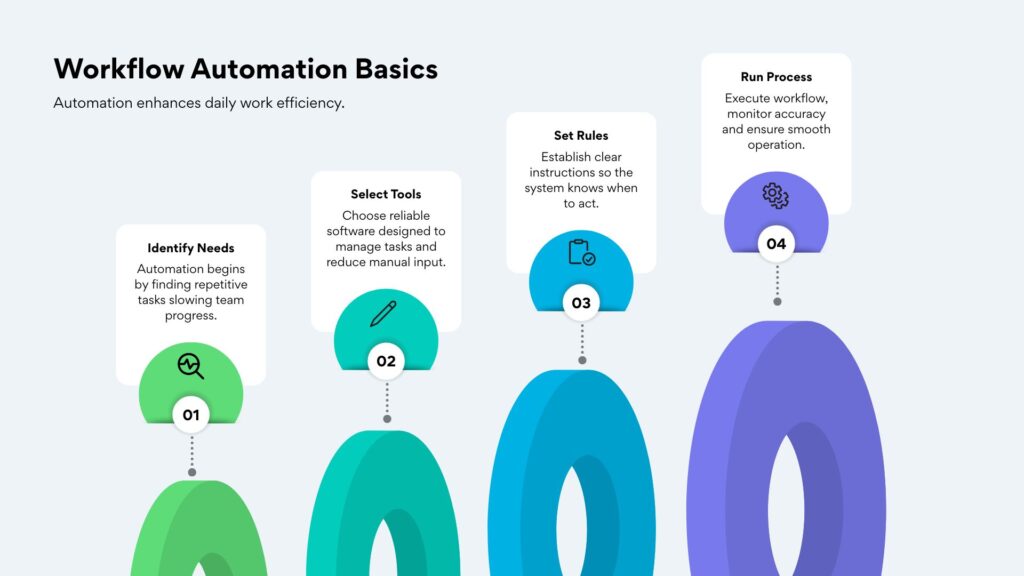
Rather than using AI randomly, build a structured workflow that supports your daily operations.
Marketing Workflow
- Research customer needs using AI.
- Generate content ideas.
- Create blog outlines.
- Write the first draft.
- Optimise content for SEO.
- Design graphics.
- Schedule social media posts.
- Analyse campaign performance.
Sales Workflow
- Capture leads automatically.
- Score prospects using AI.
- Generate personalised emails.
- Schedule follow-ups.
- Summarise customer meetings.
- Forecast future sales.
Customer Service Workflow
- Answer common questions with AI chatbots.
- Escalate complex issues to human agents.
- Analyse customer feedback.
- Identify recurring problems.
- Improve knowledge base articles.
Some Real Examples of AI in Action
Example 1: Marketing Agency
A digital marketing agency producing twenty blog posts each month struggled with tight deadlines. After introducing ChatGPT for research and first drafts, Grammarly for editing, Canva AI for graphics, and Surfer SEO for optimisation, the team reduced production time by nearly 50 percent while maintaining high editorial standards.
Example 2: Online Retail Business
An e-Commerce company received hundreds of customer enquiries daily. By implementing an AI chatbot, approximately seventy percent of routine questions were answered instantly. Consequently, customer satisfaction improved while support costs decreased.
Example 3: Manufacturing Company
A manufacturing business used AI analytics to predict equipment maintenance requirements. As a result, unexpected machine downtime decreased significantly, improving production efficiency and reducing repair costs.
Common Mistakes Businesses Make When Using AI
Even powerful AI tools cannot guarantee success if implemented poorly.
Avoid these common mistakes such as:
Expecting AI to Replace Human Expertise
AI produces impressive results, yet human judgement remains essential. Always review important documents, marketing campaigns, and customer communications before publishing.
Choosing Too Many Tools
Using ten different AI platforms often creates unnecessary complexity. Instead, build a small technology stack that solves your biggest challenges effectively.
Ignoring Employee Training
Employees should understand both the strengths and limitations of AI. Therefore, provide practical training before expecting widespread adoption.
Forgetting Data Security
Never upload confidential business information without reviewing the provider’s privacy policies and security standards.
Expert Tips to Maximise ROI from Automated Syatems
After experimenting with numerous AI platforms across SEO, content marketing, and workflow automation, several best practices consistently produce better results.
H4: Start with One High-Impact Process
Identify repetitive tasks that consume significant time each week. Automating these activities often delivers the fastest return on investment.
H4: Create Standard Operating Procedures
Develop clear workflows showing employees when AI should assist and when human review remains necessary.
H4: Measure Performance
Track metrics such as time saved, customer satisfaction, content production, conversion rates, and operational costs.
H4: Keep Learning
AI evolves rapidly. Therefore, review your technology stack every few months to ensure your business continues using the most effective solutions.
Final Thoughts
Finally, It Concludes that, AI Tools for Business have become essential for organisations that want to improve productivity, reduce operational costs, and remain competitive in today’s fast-changing digital landscape. Rather than replacing employees, the right AI solutions empower teams to work smarter, make better decisions, and focus on high-value tasks that drive long-term growth.
Whether you run a startup, a small business, or a large enterprise, adopting AI Tools for Business strategically can transform the way you manage marketing, customer service, sales, operations, and collaboration. The key is to start with one or two solutions that address your biggest challenges, measure the results, and gradually expand your AI ecosystem as your business grows.
As AI technology continues to evolve, businesses that embrace innovation today will be better positioned to seize new opportunities tomorrow. By combining human expertise with the power of AI Tools for Business, you can build more efficient workflows, deliver better customer experiences, and create a sustainable competitive advantage.
If you want to learn more about artificial intelligence, automation, and productivity, explore our related guides on AI Workflow to discover practical strategies and expert recommendations that will help your business succeed in 2026 and beyond.
Frequently Asked Questions (FAQs)
1. What are AI tools for enterprise?
Obviously. AI tools for business are software applications that use artificial intelligence to automate tasks, improve decision making, analyse data, create content, and increase productivity across different business functions.
2. Which AI tool is best for small businesses?
Basically, ChatGPT, Canva AI, Grammarly, Notion AI, and Zapier are excellent choices because they are easy to use, affordable, and suitable for a wide range of business activities.
3. Can AI reduce Company’s costs?
Undoubtedly, Yes. AI can reduce operational costs by automating repetitive work, improving efficiency, minimising errors, and helping employees focus on higher-value activities.
4, Is AI safe for business use?
Most reputable AI platforms provide strong security features. However, businesses should always review privacy policies, avoid sharing highly confidential information unnecessarily, and implement internal governance.
5. How do I choose the right AI tool?
At First, Start by identifying your biggest business challenge. Then evaluate tools based on features, integrations, ease of use, pricing, scalability, and customer support before making a decision.